

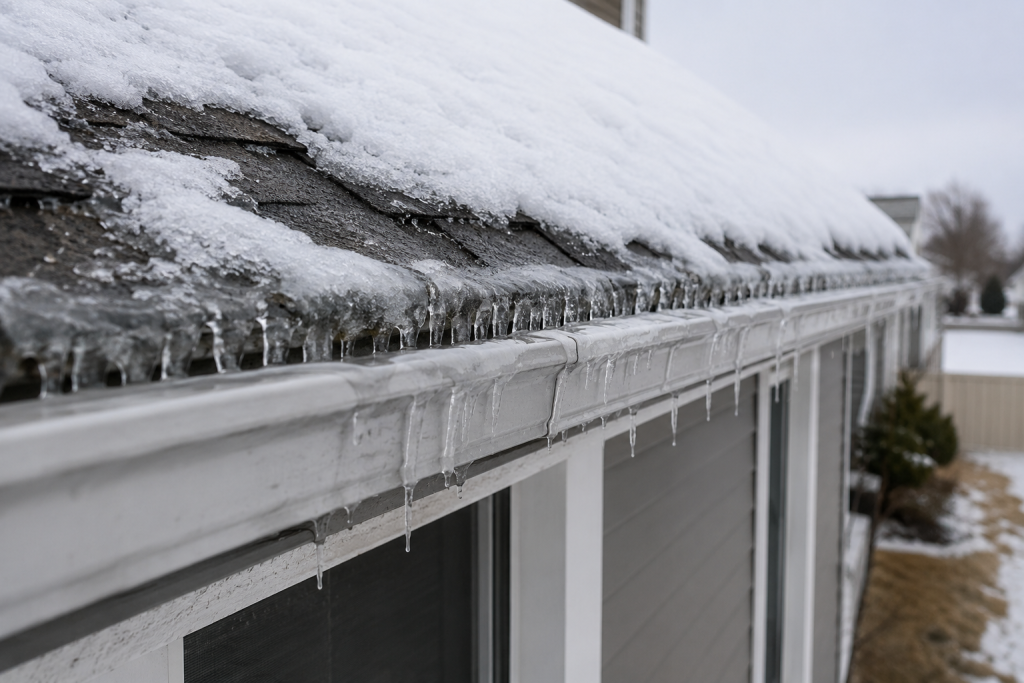
Most homeowners in Edmonton don’t think much about their gutters until water starts pouring over the edge during a storm or ice suddenly appears above the front entrance in the middle of winter.
That’s usually how it starts.
A small leak. A loose corner. A downspout overflowing during spring melt. What many people don’t realize is that Edmonton’s climate slowly wears gutter systems down year after year long before obvious damage appears.
And unlike warmer parts of Canada, Alberta homes deal with a combination of heavy snow, rapid temperature swings, spring runoff, hail, wind, and long freezing periods that place constant stress on exterior drainage systems.
For many houses, gutters are one of the hardest-working parts of the entire exterior.
Edmonton’s Climate Is Hard on Exterior Systems
Living in Edmonton means homes go through dramatic seasonal shifts every year.
In January, temperatures can stay below freezing for weeks. By spring, snow begins melting rapidly during the daytime before refreezing overnight. Summer often brings sudden storms with intense rainfall and strong wind gusts.
That cycle repeats every single year.
Roofing, siding, soffit, fascia, and gutters all expand and contract as temperatures change. Over time, even proper gutter installation in Edmonton begins showing signs of stress.
This is especially common in older homes throughout neighborhoods in:
- St. Albert
- Sherwood Park
- Leduc
- mature areas of Edmonton with older trees and aging roofing systems
Many gutter issues begin gradually and become worse each winter without homeowners noticing right away.
Freeze-Thaw Cycles Cause More Damage Than Most People Think
One of the biggest reasons gutters fail early in Alberta is the freeze-thaw cycle.
Here’s what usually happens.
Snow sitting on the roof partially melts during warmer afternoons or from heat escaping through the attic. That water drains into the gutters. Once temperatures drop again overnight, the water freezes inside the gutter system.
Then the process repeats.
At first, homeowners may only notice small icicles or occasional dripping. But internally, the gutter system is already under pressure.
As ice expands, it can slowly:
- separate seams
- loosen fasteners
- shift gutter slope
- create cracks
- pull gutters away from fascia boards
- weaken downspout connections
The damage often develops quietly over several seasons before becoming visible.
That’s why many homeowners are surprised when a section suddenly detaches during winter or early spring.
Heavy Snow Adds Significant Weight to Gutters
Snow itself becomes another major problem.
A properly installed gutter system is designed to handle water flow, but large accumulations of snow and ice create far more weight than gutters were originally intended to carry continuously.
In Edmonton, snow frequently collects along roof edges where melting and refreezing occur repeatedly. This creates dense ice buildup inside gutters and downspouts.
Once that happens, homeowners may start noticing:
- sagging gutters
- leaning downspouts
- water spilling over edges
- bent brackets
- detached corners
- overflowing sections during melt periods
Homes with poor attic ventilation or older roofing systems tend to experience these problems even more aggressively.
Spring Is When Gutter Problems Usually Become Obvious
During winter, many gutter issues stay hidden under snow and ice.
Spring is when everything finally reveals itself.
As temperatures rise, melting snow sends large amounts of water through the gutter system all at once. If gutters are clogged, damaged, or improperly sloped, water starts overflowing almost immediately.
This is usually the moment homeowners begin noticing:
- water pooling near the foundation
- flooded flower beds
- erosion around the house
- leaking corners
- overflowing downspouts
- water stains on siding
- peeling exterior paint
In some situations, water actually drains behind the gutter instead of through it because the system has started separating from the fascia board.
Once moisture gets trapped behind gutters, fascia deterioration often follows.
Mature Trees Make Gutter Maintenance More Difficult
Many Edmonton neighborhoods are known for beautiful mature trees. While they add privacy and curb appeal, they also create constant gutter maintenance issues throughout the year.
Leaves, pine needles, small branches, and seeds gradually build up inside gutters and downspouts.
Once debris blocks drainage, water sits inside the system longer than it should.
That standing moisture can eventually lead to:
- corrosion
- mold growth
- gutter staining
- insect activity
- fascia rot
- premature aging
In heavily treed areas, gutters often require seasonal gutter cleaning to maintain proper drainage.
Without regular maintenance, even newer systems may begin failing earlier than expected.
Gutters Protect More Than Just the Roof
A surprising number of homeowners underestimate how important gutters actually are.
Their job goes far beyond moving rainwater off the roof.
A properly functioning gutter system helps protect:
- siding
- soffit and fascia
- basement walls
- landscaping
- windows and doors
- walkways
- foundation structure
When drainage stops working properly, water starts collecting near the home instead of moving safely away from it.
In Alberta’s climate, repeated moisture exposure around the foundation can eventually contribute to:
- basement leaks
- soil erosion
- foundation movement
- cracking
- mold problems
Sometimes what appears to be a “small gutter issue” becomes a much larger exterior repair later.
Older Gutter Systems Often Become Inefficient Over Time
Not all gutter damage looks dramatic.
Some systems simply stop performing efficiently after years of exposure to Edmonton weather.
Older sectional gutters commonly develop:
- weak seams
- uneven slope
- recurring leaks
- drainage bottlenecks
- loose joints
Many homeowners continue patching the same sections repeatedly without realizing the overall system has already reached the end of its lifespan.
Modern seamless gutters are typically more durable because they reduce the number of joints where leaks tend to develop.
For homes dealing with frequent overflow or recurring repair issues, replacement often becomes more cost-effective than ongoing repairs.
Signs Your Gutters May Need Attention
Some gutter problems are obvious. Others are easier to miss.
A professional inspection may be worth considering if you notice:
- water overflowing during rainstorms
- visible sagging
- detached sections
- ice buildup near roof edges
- water marks on siding
- peeling paint near gutters
- standing water around the home
- basement moisture after heavy rain
- repeated clogging problems
Even small warning signs can indicate larger drainage issues developing underneath.
Why Proper Installation Matters in Alberta
In Edmonton’s climate, installation quality matters just as much as the gutter material itself.
A poorly sloped gutter system may technically “work” during light rainfall but fail completely during spring runoff or heavy storms.
Proper installation includes:
- correct pitch
- secure fastening systems
- adequate downspout placement
- strong fascia attachment
- efficient drainage direction
Small installation shortcuts often become major problems after several Alberta winters.
That’s one reason professionally installed seamless gutters usually last significantly longer in colder climates.
Final Thoughts
Edmonton weather is tough on homes, and gutters are one of the first exterior systems to feel the impact.
Between snow accumulation, ice buildup, freeze-thaw cycles, debris, and heavy spring runoff, gutter systems here deal with conditions that many warmer regions never experience.
Unfortunately, most damage develops gradually and often goes unnoticed until water starts affecting other parts of the property.
Regular inspections, seasonal maintenance, and timely Edmonton gutter replacement can help homeowners avoid much larger repair costs later on.
For many homes in Edmonton, properly functioning gutters are not just a maintenance item. They are an important part of protecting the entire exterior structure year-round.