

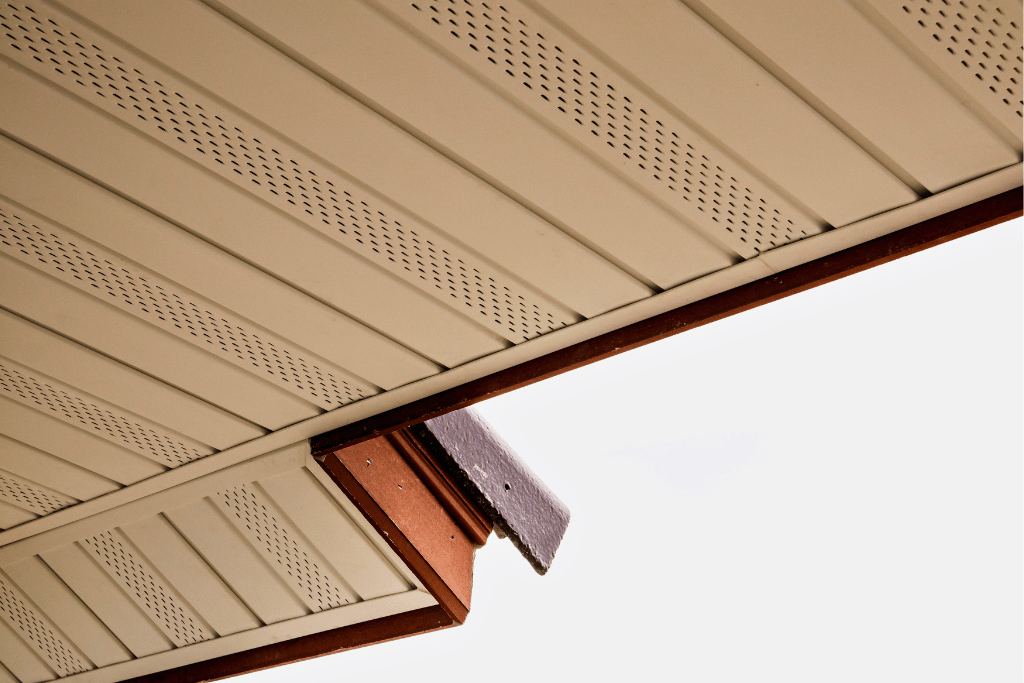
If someone asked you to point out the soffit on your house, would you know where to look? Many homeowners wouldn’t. That’s understandable. Soffit and fascia aren’t the parts of a home that get much attention. People notice new windows, fresh siding, or a beautiful front door. The roof gets inspected after every hailstorm. Gutters are cleaned when they overflow.
The trim tucked beneath the edge of the roof usually goes unnoticed.
Ironically, those overlooked components are working every single day.
They support your gutter system, protect exposed roof framing from moisture, allow your attic to breathe properly, and help keep birds, squirrels, and insects outside where they belong.
When soffit and fascia begin to fail, the warning signs are rarely dramatic. The deterioration is slow. That’s exactly why many homeowners don’t realize there’s a problem until the repair involves far more than replacing a few boards.
After years of working on homes throughout Edmonton, exterior contractors often notice the same pattern.
The customer calls about sagging gutters.
Or peeling paint.
Sometimes it’s water dripping beside the garage after every rainfall.
The gutters appear to be the issue.
Then the old system comes down.
Behind it sits fascia that has quietly been absorbing moisture for years.
What looked like a simple gutter replacement suddenly turns into carpentry work.
The lesson is simple: the earlier these problems are discovered, the easier—and less expensive—they are to fix.
Here are some of the most common warning signs homeowners should never ignore.
Paint Keeps Peeling in the Same Spot
Most exterior paint products are designed to last for years.
If one section along your roofline constantly peels while the rest of the house looks perfectly fine, something underneath is usually causing it.
Water is almost always involved.
It may be running behind the gutter during heavy rain.
It could be dripping from a leaking joint.
Sometimes melting snow repeatedly wets the same piece of fascia every winter.
Homeowners often repaint the area several times before realizing paint isn’t the actual problem.
Paint simply reveals it.
A fresh coat might improve the appearance for a season, but if moisture continues reaching the wood underneath, the peeling will eventually return.
That’s often one of the first clues that the fascia itself deserves a closer inspection.
Your Gutters No Longer Look Straight
Walk across the street and take a good look at your roofline.
Do the gutters follow a clean, straight line?
Or do you notice sections dipping slightly in the middle?
Many people immediately assume the gutters are old.
Sometimes they are.
But gutters don’t usually sag on their own.
They’re attached directly to the fascia board.
When moisture weakens that board over time, the fasteners slowly lose their grip. The gutter begins pulling away, even if the aluminum itself is still in good condition.
A contractor removing old gutters often discovers the real issue isn’t the metal hanging from the house.
It’s the wood hidden behind it.
Replacing gutters without repairing damaged fascia is a little like putting new tires on a vehicle with a bent suspension.
The visible problem disappears, but the underlying issue remains.
Birds Suddenly Become Interested in Your Roof
Homeowners are sometimes surprised when birds begin nesting near the roofline or squirrels seem unusually interested in one corner of the house.
Wildlife isn’t randomly choosing that location.
Animals are incredibly good at finding small openings.
A loose soffit panel.
A section beginning to separate.
A vent that’s partially damaged.
To us, those gaps look insignificant.
To a squirrel looking for a warm place before winter, they’re an invitation.
Once animals reach the attic, the situation often becomes much more complicated.
Insulation may be disturbed.
Ventilation pathways become blocked.
Electrical wiring occasionally suffers damage.
Repairing a small section of soffit is considerably easier than removing wildlife and restoring an attic afterward.
Your Home Seems to Stay Damp Longer After Rain
Here’s something many homeowners never notice until someone points it out.
After a heavy rainfall, take a slow walk around your property.
Look beneath the roofline.
Are certain areas still dripping long after the rain has stopped?
Is one corner noticeably wetter than the rest?
Moisture lingering in the same location usually means water isn’t being directed where it should be.
Sometimes clogged gutters are responsible.
Other times, damaged fascia allows water to travel behind the gutter instead of through it.
The important thing isn’t simply where the water lands.
It’s how often it lands there.
Repeated exposure gradually weakens building materials, even when each individual rainfall seems harmless.
Your Attic Doesn’t Feel Quite Right
Most homeowners never connect attic conditions with soffit.
Yet they’re closely related.
Modern homes rely on continuous airflow through the attic.
Fresh air enters through vents located in the soffit.
Warm, moist air exits near the roof peak.
When this airflow is interrupted, several things begin happening.
During summer, attic temperatures climb dramatically.
During winter, warm indoor air becomes trapped instead of escaping properly.
Moisture begins collecting where it shouldn’t.
Eventually, mold, condensation, and shortened roof life become real possibilities.
Sometimes homeowners notice unusually high cooling costs before realizing poor ventilation is contributing to the problem.
Sometimes the first clue is condensation inside the attic.
Either way, damaged soffit often plays a larger role than expected.
Wood That Feels Different Than It Used To
Exterior wood doesn’t usually announce that it’s failing.
It changes gradually.
A fascia board that was perfectly solid ten years ago may begin feeling slightly softer near one corner. A nail no longer holds quite as tightly. Paint develops tiny cracks that seem cosmetic at first.
None of these changes happen overnight.
That’s why homeowners rarely notice them.
During inspections, contractors will often press gently against sections that appear weathered. It’s not a complicated test. Years of experience simply teach you what healthy material should feel like.
Sometimes the board is still firm.
Sometimes it flexes just enough to raise concern.
Occasionally, a screwdriver passes through wood that looks perfectly acceptable from the ground.
Moisture has a way of hiding until someone gets close enough to investigate.
The encouraging part is that localized deterioration is often much easier to repair than widespread damage that has been left untouched for years.
The Roof Looks Fine, But Something Feels Off
One conversation happens surprisingly often.
“The roof isn’t leaking, so everything should be okay.”
It’s a reasonable assumption.
The problem is that not every moisture issue starts on top of the roof.
Water follows gravity, but it also follows opportunity.
If gutters overflow repeatedly, water may travel behind the fascia instead of over it.
If soffit panels have separated slightly, wind-driven rain can enter places that were never designed to become wet.
Because the process is gradual, homeowners often don’t notice until secondary damage appears somewhere else.
Maybe a section of trim begins swelling.
Maybe paint starts bubbling near a window.
Perhaps a ceiling stain appears months later.
By then, the original source has usually been active for quite some time.
Finding that source early is often the difference between a straightforward repair and a much larger restoration project.
Alberta’s Weather Doesn’t Forgive Neglected Exterior Components
Living in Edmonton means accepting weather that changes quickly.
A warm Chinook can melt accumulated snow within hours.
The following week, temperatures might drop below -20°C again.
Exterior materials expand.
They contract.
Snow melts.
Water flows.
Ice forms.
The cycle repeats dozens of times every winter.
That constant movement gradually affects joints, fasteners, sealants, and wood components around the roofline.
Homes that receive regular inspections generally age much better because small concerns are corrected before multiple seasons have an opportunity to make them worse.
Waiting until visible failure appears often means the underlying problem has already progressed much further.
Replacing Soffit and Fascia Isn’t Only About Appearance
There’s no question that new soffit and fascia improve curb appeal.
Fresh, straight rooflines immediately make a home look newer and better maintained.
But appearance isn’t the primary reason contractors recommend replacement.
Protection is.
New fascia provides solid support for gutters.
Properly ventilated soffit helps the attic perform as intended.
Modern aluminum products eliminate many of the maintenance concerns associated with older painted wood.
For homeowners planning to remain in their house for many years, these improvements often reduce future maintenance while improving overall durability.
That’s especially valuable in Alberta, where weather places considerably more stress on exterior materials than in many milder climates.
When Repairs Make Sense and When Replacement Is the Better Option
Not every damaged fascia board needs to be replaced.
Not every soffit panel has reached the end of its life.
Sometimes the issue is isolated.
A single impact from a ladder.
Storm damage affecting one section.
A localized repair can restore the system without major work.
Other homes tell a different story.
Multiple soft areas.
Repeated paint failure.
Sagging gutters across several elevations.
Evidence of long-term moisture.
At that point, replacing the affected components usually becomes the smarter investment.
Instead of repairing the same areas every couple of years, homeowners gain a durable system designed to perform for decades.
An experienced contractor can usually explain both options after a thorough inspection, allowing homeowners to make an informed decision based on the actual condition of the home rather than guesswork.
A Small Investment in Prevention One thing becomes clear after working on enough homes.
Exterior systems almost always give warnings before they fail completely.
The challenge is recognizing those warnings early enough to act.
Peeling paint isn’t always just old paint.
Sagging gutters aren’t always just old gutters.
A squirrel disappearing into the roofline isn’t simply wildlife being wildlife.
These are often symptoms rather than isolated problems.
At Nice Exteriors, we’ve helped homeowners throughout Edmonton and surrounding communities solve roofline problems before they became major renovation projects. Whether the issue involves aging aluminum, deteriorating wood, storm damage, or poor ventilation, our team provides professional Soffit and Fascia Edmonton services designed specifically for Alberta homes. When replacement is the better long-term solution, we also offer complete fascia replacement Edmonton services using durable, low-maintenance materials that stand up to the province’s demanding climate.
The biggest repairs rarely begin with catastrophic damage.
More often, they begin with small warning signs that seemed easy to ignore.
Paying attention to those signs today can save thousands of dollars tomorrow while helping your home stay protected through every season Edmonton has to offer.