

Edmonton gutters do not get much of a break.
By the time winter is over, they have already carried the weight of snow and ice for months. Spring melt follows quickly, sometimes sending a surprising amount of water through the system in a short period. Summer adds wind, dust, seeds, and storm debris. Then fall arrives and fills everything with leaves just before freezing temperatures return.
That is why asking whether spring or fall gutter cleaning is more important is not as simple as choosing one season.
Both matter, but they solve different problems.
For some homes, one thorough cleaning each year may be enough. For properties surrounded by mature trees, especially in older Edmonton neighborhoods, checking gutters twice a year is usually the safer approach. The condition of the roof, nearby trees, gutter design, and previous drainage problems all influence the right schedule.
At Nice Exteriors, we look at gutter cleaning as preventive maintenance rather than a cosmetic job. Removing debris is important, but the bigger benefit is seeing how the drainage system performed through the previous season before a small issue becomes an expensive one.
What Winter Leaves Behind
A gutter can look perfectly fine from the driveway and still have problems after winter.
Snow does not simply sit on the roof and disappear. During warmer winter days and early spring, meltwater reaches the eaves troughs, freezes again overnight, and repeats the process. Ice can form around joints, downspout openings, and areas where water is already draining slowly.
Then there is the weight.
A gutter packed with frozen debris and ice is much heavier than an empty one. Over time, that extra load can loosen hangers or pull sections slightly away from the fascia. The change may be small enough that you would never notice it from the ground, yet even a slight shift in slope can leave water sitting in the gutter after the next rain.
Spring is often the first good opportunity to see what winter actually did.
That is one reason we do not treat spring cleaning as simply “removing whatever is inside.” It is also a useful inspection point.
Why Spring Gutter Cleaning Matters
Once temperatures settle above freezing, runoff begins moving through the gutter system again. Anything left inside from the previous year can end up pushed toward downspouts.
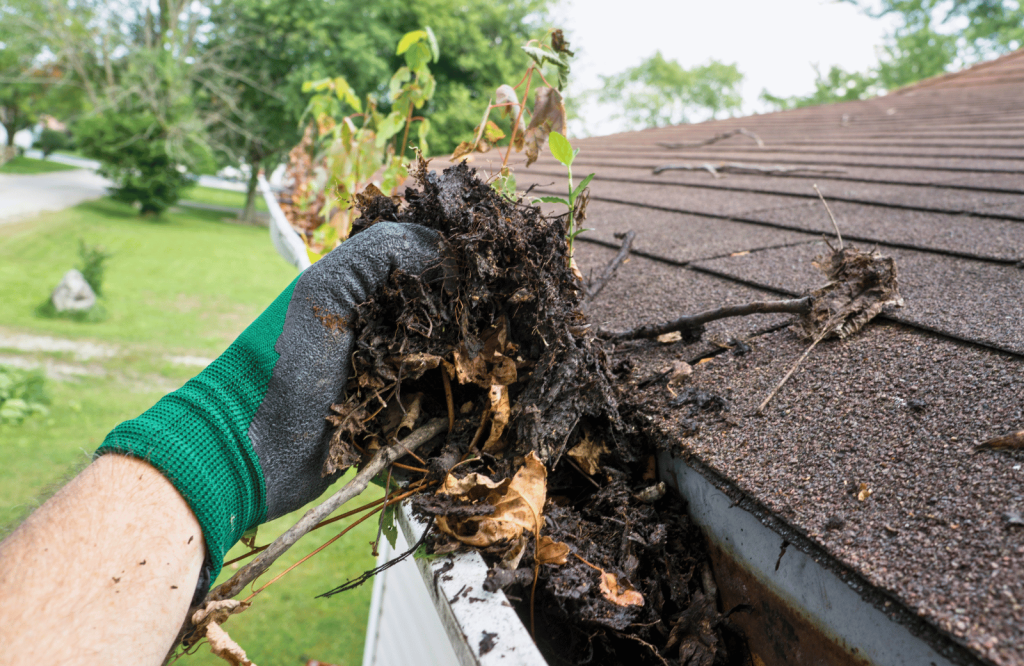
Leaves break down. Dirt turns to mud. Roofing granules collect at low points. Pine needles and small twigs can lodge inside elbows where they are difficult to see.
A gutter may still appear open across most of its length while one downspout is partially blocked.
That matters during a normal rain. It matters even more during spring melt or a heavy Edmonton thunderstorm.
Water does not need a completely blocked gutter to overflow. If a downspout can only handle part of the flow, water backs up until it spills over the edge.
Spring gutter cleaning gives the system a fresh start before the wetter months. It also makes it much easier to spot loose hangers, leaking corners, separated joints, or sections that are holding water when they should be draining.
We often find that the actual problem is not dramatic. A small adjustment or repair may be all that is needed. Catching it in April or May is much easier than dealing with water pouring over the gutter in the middle of a summer storm.
Fall Cleaning Has a Different Job
Fall gets most of the attention because the problem is visible.
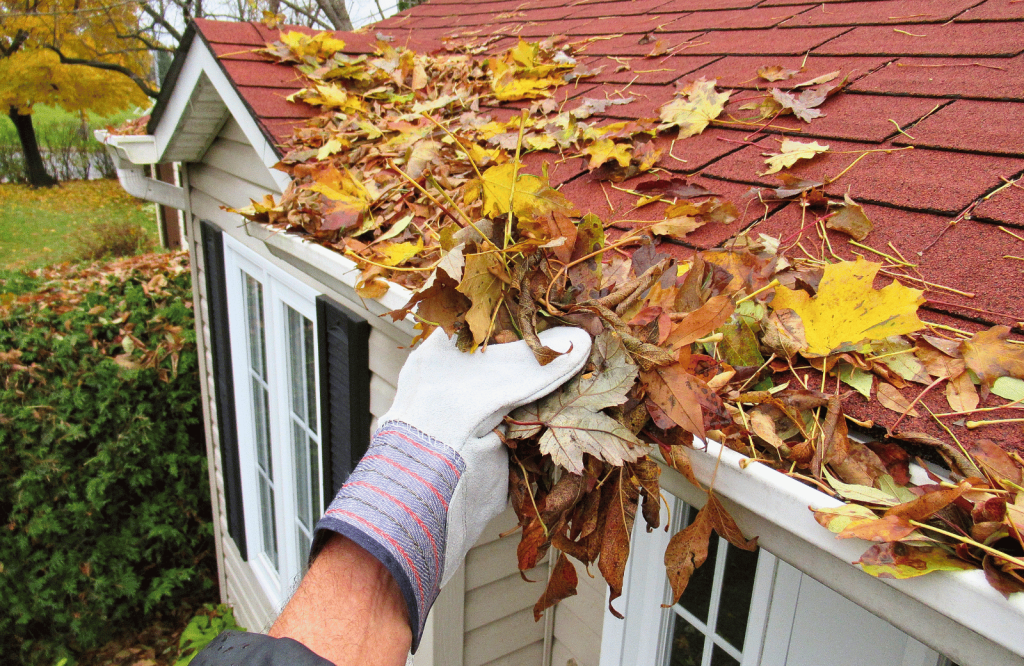
Leaves collect quickly. Some homes can go from clean gutters to completely covered eavestroughs in only a few weeks, particularly where large poplars, elms, or other mature trees sit close to the roof.
Dry leaves are not necessarily the biggest issue. The trouble begins after they become wet and compacted.
They settle into the bottom of the gutter, mix with dirt and form a dense layer that can block water from moving toward the downspout. If that material remains in place when freezing weather arrives, it can become part of a solid frozen mass.
That creates exactly the situation you do not want heading into winter: a heavy gutter with limited drainage.
Fall cleaning is therefore less about repairing winter damage and more about preparing the system for what is coming next.
Ideally, gutters should be cleaned after most leaves have fallen but before consistent freezing temperatures arrive. Doing it too early can mean repeating the job after another round of leaves lands on the roof.
So Which One Matters More?
For an Edmonton homeowner who can only choose one cleaning, fall usually deserves priority if the property has mature trees nearby.
Going into winter with gutters packed with leaves creates too many avoidable problems.
But that does not make spring cleaning optional for every home.
If you have had previous gutter problems, heavy ice buildup, large amounts of roof debris, or water collecting near the foundation, spring is the time to check whether the system made it through winter properly.
A practical way to look at it is this:
Fall cleaning prepares the gutters for winter. Spring cleaning tells you how they survived it.
Those are two different jobs.
For many homes, especially ones with older drainage systems, both are worthwhile.
Your Property Matters More Than the Calendar
There is no rule that every home in Edmonton must have its gutters cleaned exactly twice a year.
Some need more attention. Others need less.
A newer home in an open subdivision with few mature trees may stay remarkably clean. On the other hand, a house surrounded by large trees can collect enough organic material to create drainage problems long before fall is over.
Roof design also makes a difference.
Certain valleys channel a large amount of water into a short gutter section. Steeper roofs can move water quickly. Long gutter runs depend heavily on proper slope. Homes with multiple rooflines may have several areas where debris naturally collects.
We would rather look at how a particular house behaves than recommend the same maintenance schedule to everyone.
If your gutters consistently stay clear and drain properly, annual inspection may be enough. If you clean them every fall and they are already full again by June, your property is telling you that once a year is not sufficient.
A Few Clues That You Should Not Wait Until Fall
Gutter problems tend to announce themselves when it rains.
One of the easiest things a homeowner can do is walk around the house during a moderate rainfall and watch the system work.
Water should enter the gutters, move toward the downspouts, and discharge away from the foundation.
Pay attention if water is spilling over one particular section while the rest of the gutter is working normally. That often points to a local blockage or slope issue.
A waterfall over several feet of gutter usually means something more significant is restricting flow.
After the rain stops, look again. Water sitting in the gutter hours later can indicate poor pitch or sagging.
Other warning signs are visible even in dry weather: staining on the fascia, soil erosion below a gutter line, a downspout that has pulled loose, or sections that no longer look straight.
None of these means you automatically need a new system. They simply mean it is worth investigating before the next major storm.
Cleaning Cannot Fix a Worn-Out Gutter
There is an important point that sometimes gets missed in gutter maintenance advice.
A clean gutter can still be a bad gutter.
Removing debris will not fix metal that has been bent out of shape for years. It cannot restore damaged fascia, reconnect a failing corner, or correct a long section that no longer has enough slope to drain.
This becomes especially relevant with older systems.
A homeowner may clean the gutters, see that they are empty, and reasonably assume the problem has been solved. Then the next rainfall produces the same overflow as before.
At that stage, the issue is no longer maintenance.
If several areas are leaking, pulling away, or sagging, a professional assessment can determine whether a repair is realistic or whether gutter replacement will cost less over the remaining life of the home.
There is no benefit in replacing a system that only needs maintenance. There is also little value in paying repeatedly to clean and patch gutters that are structurally failing.
What About Newly Installed Gutters?
New gutters still need attention.
A professionally completed gutter installation should provide correct slope, secure fastening, and adequate drainage for the roof area, but it cannot prevent leaves, seeds, and debris from reaching the system.
Maintenance usually becomes easier because new seamless gutters have fewer joints where material can collect or leaks can develop.
The first year after installation is also a useful time to observe how water moves around the property.
Watch where downspouts discharge. Check the areas below large roof valleys during heavy rain. Make sure water is not pooling close to the foundation.
A good installation solves the drainage design. Regular cleaning keeps that design working as intended.
Why Downspouts Deserve Just as Much Attention
Homeowners often focus on the horizontal gutters because that is where debris is visible.
Downspouts are easier to forget.
Unfortunately, one blockage inside a downspout can affect an entire side of the house.
The upper opening is a common trouble spot. Leaves and roofing debris collect there until only a narrow passage remains. From the ground, everything can look normal.
Elbows are another problem area. Once wet leaves get packed into a bend, flushing them out may take more than simply running water from above.
A proper cleaning should confirm that water moves freely through the downspouts, not just that the gutter itself looks empty.
The discharge point matters too. Sending water efficiently through a clean downspout does not help much if it empties directly beside the foundation.
Is DIY Gutter Cleaning Worth It?
For some single-story homes with safe access, homeowners can handle basic cleaning themselves.
The work is not particularly complicated. The risk is usually the ladder.
Wet leaves, uneven ground, and reaching too far sideways are a bad combination. Two-storey homes add another level of risk.
There is also a difference between removing visible debris and inspecting the system properly.
When Nice Exteriors performs gutter work, we are not only looking at what is inside the trough. We pay attention to how the gutter sits against the fascia, where water has been traveling, whether fasteners are holding, and whether downspouts are actually clear.
Sometimes what looks like a cleaning problem turns out to be a repair problem. Occasionally, it is the opposite, and a homeowner who expected a larger repair simply needed the system cleared and adjusted.
That is exactly why an inspection is useful.
A Simple Edmonton Gutter Maintenance Schedule
If you want a practical starting point, use your property rather than an arbitrary date.
Check the gutters after the snow has melted and temperatures have stabilized in spring. If there is significant debris or evidence of winter movement, clean and service them then.
Check again after most leaves have fallen in autumn. Properties with mature trees will often need another full cleaning at this stage.
Beyond those two points, inspect the system after unusually severe weather. Edmonton hail, strong winds, and heavy storms can move branches or deposit material on the roof even in the middle of summer.
You do not need to climb a ladder every month. Simply paying attention to how water drains during rain will reveal a lot.
Spring or Fall? The Better Answer Is Timing
If we had to choose one season for a tree-covered Edmonton property, we would clean the gutters in late fall before winter sets in.
But maintenance works best when it responds to the house rather than the calendar.
Spring tells you what winter left behind. Fall removes what could become a problem during the next freeze. Homes with mature trees, complicated rooflines, or a history of drainage issues often benefit from both.
The important part is not whether you clean in May or October. It is making sure water has a clear, controlled path from the roof to a safe discharge point away from the house.
That is what the gutter system was installed to do.
At Nice Exteriors, we provide gutter inspections, repairs, and cleaning throughout Edmonton and surrounding communities. If you are not sure whether your gutters simply need maintenance or whether there is a larger drainage problem, we can inspect the system and recommend what actually makes sense for the property.
Frequently Asked Questions
Should gutters in Edmonton be cleaned twice a year?
For homes with mature trees, spring and fall cleaning is a sensible schedule. Properties with fewer trees may need less frequent cleaning, while heavily treed lots can require additional maintenance.
What is the best month for fall gutter cleaning in Edmonton?
There is no perfect date because leaf fall changes from year to year. The ideal time is after most nearby trees have dropped their leaves but before consistent freezing temperatures and snow arrive.
Do gutters need cleaning in spring if they were cleaned in fall?
Not always. However, a spring inspection is still useful after a difficult winter. Snow, ice, roofing debris, and wind can create new problems even when the gutters were clean before winter.
Why are my gutters overflowing when they look clean?
The downspout may be blocked, the gutter may have lost its proper slope, or a section may be sagging. Cleaning the visible debris will not correct those problems.
Can clogged gutters damage soffit and fascia?
Yes. Overflowing or backed-up water can repeatedly wet the roof edge and fascia area. Over time, moisture can contribute to deterioration and other exterior problems.
How do I know when cleaning is no longer enough?
If the gutters are clean but continue to leak, hold water, sag, or pull away from the fascia, the issue is likely structural. At that point, an inspection can determine whether repair or replacement is the more sensible option.