

Choosing the Right Soffit and Fascia Materials for Edmonton’s Climate
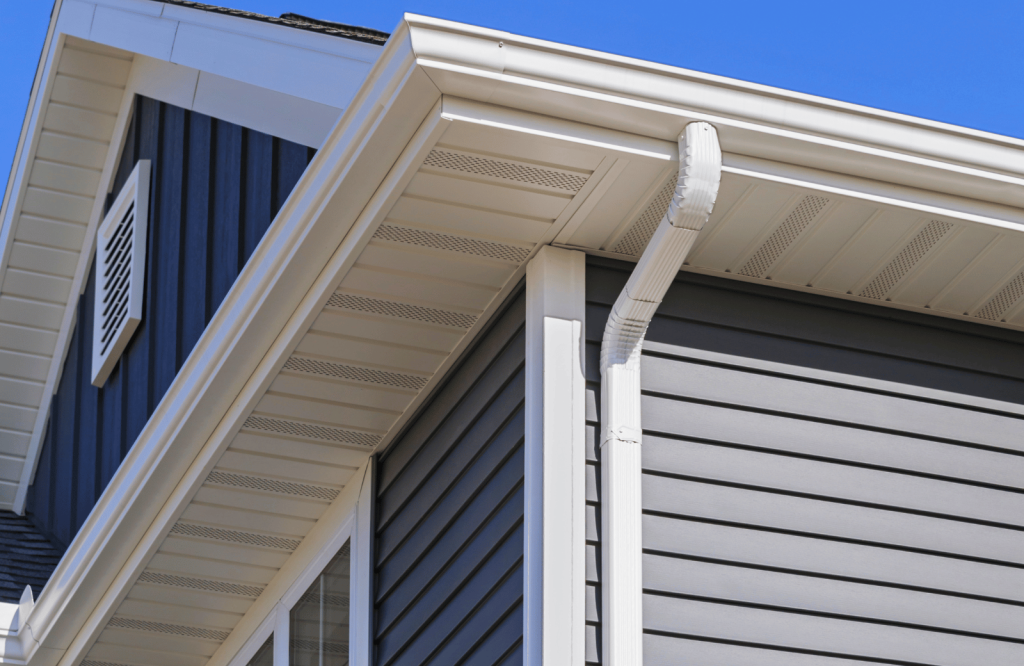
Soffit and fascia do not usually get the same attention as siding, roofing, or gutters, but they have an important job. They protect the roof edge, help manage attic ventilation, support the gutter system, and finish the transition between the roof and the exterior walls.
In Edmonton, those parts of the home also deal with a difficult mix of weather. Winter temperatures can stay well below freezing for long periods. Snow and ice add weight along the roofline. Spring melt can expose weak spots around the eaves. Summer storms bring wind, rain, and hail. Over time, even small weaknesses in soffit or fascia can create bigger problems.
The material you choose matters.
There is no single “best” option for every house. The right choice depends on the age of the property, roof design, ventilation needs, maintenance expectations, budget, and the condition of the existing exterior.
At Nice Exteriors, we look at soffit and fascia as part of the whole roofline system rather than isolated trim pieces. That matters because the wrong material, or the right material installed poorly, can lead to moisture problems, loose gutters, or premature deterioration.
What Soffit and Fascia Actually Do
Before comparing materials, it helps to understand the difference between the two.
The fascia is the vertical board or metal-covered surface that runs along the edge of the roof. Gutters are often attached to it, so it needs to remain straight, solid, and properly protected from moisture.
The soffit sits underneath the roof overhang. Its job is partly cosmetic, but ventilation is just as important. Ventilated soffit allows fresh air to enter the attic while warmer air exits through higher roof vents.
When that airflow is working properly, it helps control moisture and heat inside the attic.
If soffit vents are blocked or undersized, condensation can build up inside the roof structure during winter. That can contribute to mold, wet insulation, and damage to wood components.
The fascia has a different problem. It is directly exposed to runoff, snow, ice, and gutter movement. If water gets behind the protective surface, the wood underneath can begin to soften or rot.
That is why material choice and installation quality are closely connected.
Why Edmonton’s Climate Changes the Decision
A soffit and fascia system that performs well in a mild climate may not be the best choice for Alberta.
Edmonton homes deal with repeated temperature changes throughout the year. Metal expands and contracts. Wood absorbs and releases moisture. Sealants age faster when they move through large temperature swings.
Snow and ice also put pressure on the roof edge.
If gutters become clogged and water backs up, fascia areas are often the first to stay wet. During spring melt, water may repeatedly freeze and thaw near joints and corners.
Wind matters too. Poorly secured soffit panels can loosen during strong gusts, especially on exposed sides of the house.
This is why we usually recommend materials that handle moisture well, require limited maintenance, and can be installed with enough flexibility to move through seasonal temperature changes without failing.
Aluminum Soffit: The Most Practical Choice for Many Edmonton Homes
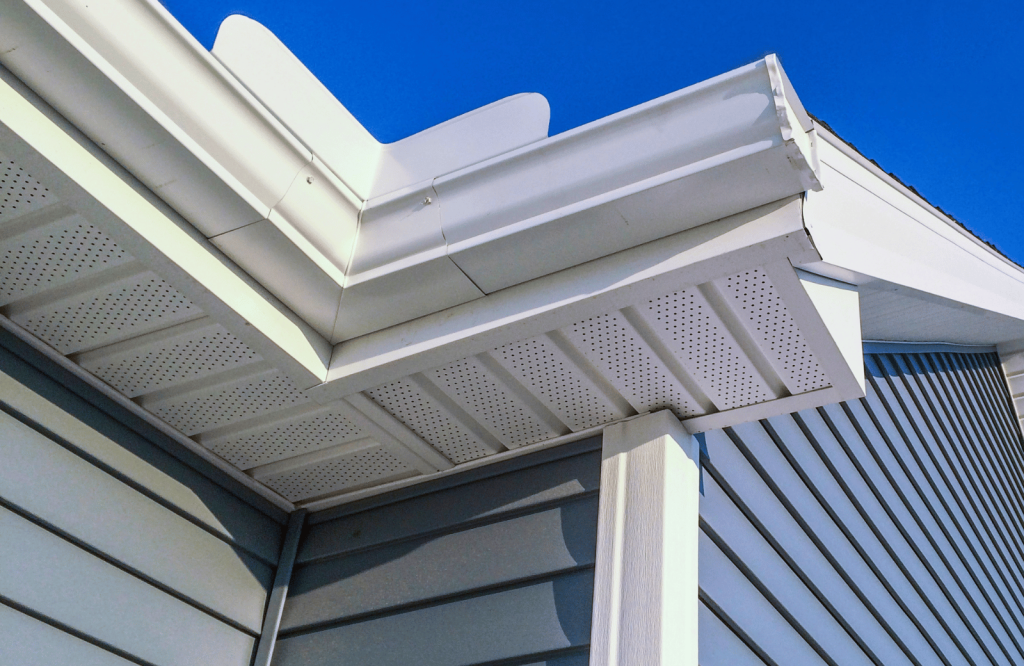
Aluminum soffit is one of the most common options for residential properties, and there is a good reason for that.
It does not rot, it handles moisture well, and it requires very little maintenance compared with wood.
For Edmonton homeowners, aluminum has several practical advantages.
It remains stable through freezing weather, does not absorb water, and can be installed in vented sections to support attic airflow. It is also available in a wide range of colours, which makes it easier to match existing fascia, siding, gutters, and trim.
Another benefit is weight. Aluminum soffit is light enough that it does not place unnecessary stress on the roof overhang, but when installed correctly, it holds up well against normal wind conditions.
That does not mean it is indestructible.
Hail can dent it. Strong impact can deform panels. Improper fastening can also cause sections to loosen or rattle.
Still, for most Edmonton homes, aluminum offers a very good balance of durability, appearance, ventilation, and maintenance.
Vinyl Soffit: Affordable, but Not Always the First Choice
Vinyl soffit is another option homeowners sometimes consider because it is affordable and easy to maintain.
It will not rust and does not require painting. It is also available in vented and solid panels.
The challenge is temperature movement.
Vinyl expands and contracts more noticeably than aluminum. In a climate with large seasonal temperature swings, that movement needs to be accounted for during installation.
If panels are installed too tightly, they can buckle or warp as temperatures change.
In addition, vinyl can become more brittle in extreme cold.
That does not mean vinyl is automatically a bad choice. In some homes it performs well. But for Edmonton, we generally pay close attention to panel quality, installation method, and exposure before recommending it.
Wood Soffit: Attractive, but High Maintenance
Wood soffit can look excellent on certain homes, especially older properties or custom builds where natural materials are part of the design.
But Edmonton’s climate makes wood more demanding.
Wood absorbs moisture. If the finish begins to fail, water can penetrate the surface and eventually cause swelling, cracking, or rot.
It also requires periodic painting or staining.
In protected locations, high-quality wood soffit can last a long time. In exposed rooflines, especially where drainage is imperfect, maintenance becomes more important.
For homeowners who prefer a natural look and are willing to maintain it, wood can still make sense.
For someone looking for the lowest-maintenance option, aluminum is usually easier to live with.
What About Fascia Materials?
Fascia is a little different because many homes use a wood fascia board that is then wrapped or capped with metal.
The underlying wood provides structural support. The metal covering protects that wood from weather.
For Edmonton, aluminum fascia capping is one of the most practical solutions.
It creates a durable outer layer that sheds water and does not require painting. It also protects the fascia board from repeated exposure to rain and snow.
This becomes especially important where gutters are attached directly to the fascia.
If the fascia board starts to deteriorate, gutter fasteners may no longer hold properly. The gutter can begin to pull away from the house, sag, or lose its slope.
That is why we never treat fascia as just decorative trim.
When we inspect a roofline at Nice Exteriors, we look at the condition of the wood underneath before installing or replacing the outer metal.
Covering damaged wood does not fix the problem.
Aluminum Fascia vs. Painted Wood Fascia
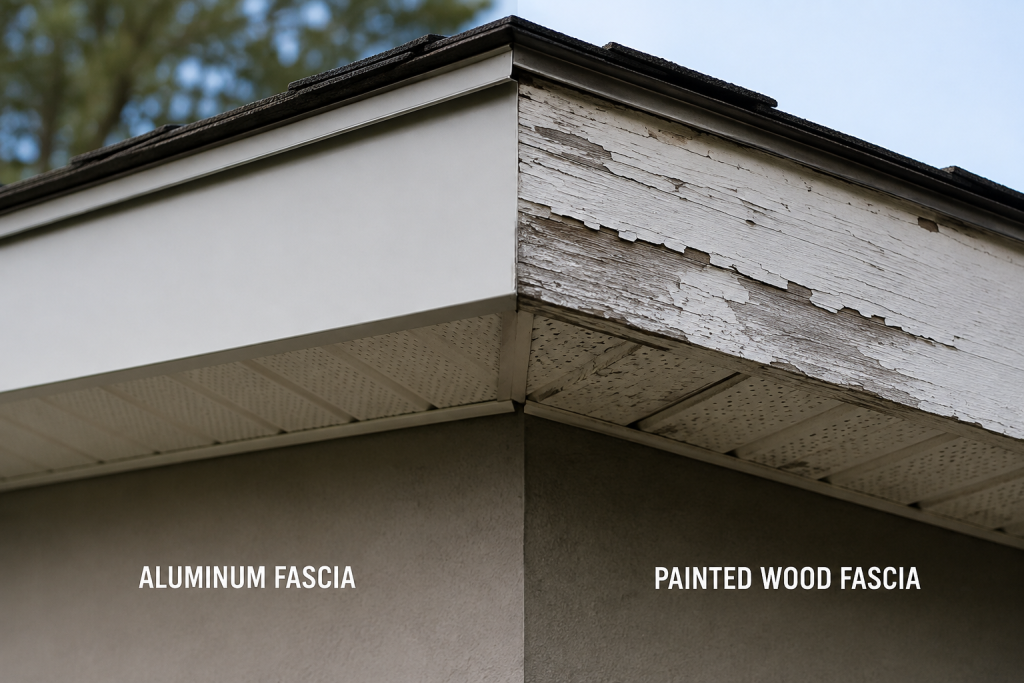
Painted wood fascia is still common, especially on older homes.
It can look good and is easy to repair in small sections, but it requires maintenance.
Once paint starts peeling or cracking, water can reach the wood. If that continues for several seasons, the board may soften around gutter fasteners or joints.
Aluminum-capped fascia reduces that maintenance considerably.
For homeowners who do not want to repaint the roofline every few years, it is usually the more practical option.
The main requirement is proper installation. Water needs to be directed over the surface, not behind it. Corners, joints, and transitions around gutters need to be detailed carefully.
Ventilation Should Drive the Soffit Decision
One of the biggest mistakes homeowners make is choosing soffit based only on appearance.
Ventilation is more important.
If the attic does not have enough intake ventilation, moisture can build up in winter. Warm indoor air naturally rises, and some of that moisture can reach the attic space.
Without proper airflow, condensation may form on cold roof surfaces.
That can create problems with:
- insulation
- roof sheathing
- framing
- mold growth
- ice buildup
Ventilated soffit helps bring cooler, drier outside air into the attic.
The exact amount of ventilation needed depends on the roof design and the ventilation system as a whole. More vents are not always better if the exhaust side of the system is not balanced.
This is why soffit replacement should not be treated as a purely cosmetic project.
Should Every Soffit Panel Be Vented?
Not necessarily.
Some homes use a combination of vented and solid panels.
The right layout depends on the attic ventilation design.
In many cases, strategically placed vented sections provide the intake airflow needed without using perforated panels across the entire roofline.
A contractor should look at the existing attic ventilation, roof vents, and soffit layout before making a recommendation.
Simply replacing old solid panels with random vented ones can create an uneven result if the system is not planned properly.
How Gutters Affect Fascia Life
Gutters and fascia are closely connected.
When a gutter leaks, overflows, or pulls away from the roof edge, water often reaches the fascia first.
That is why recurring gutter problems frequently show up as fascia damage.
If your gutters are old, sagging, or repeatedly leaking at the same corners, it is worth inspecting the fascia at the same time.
Sometimes the gutter itself is still repairable. In other cases, the fascia behind it has deteriorated enough that new fastening is needed before the gutter can be secured properly.
This is also where natural internal links matter from a user perspective. Homeowners dealing with ongoing roofline moisture may need gutter replacement if the existing system is beyond repair, while a newer home with poor drainage design may benefit from a properly planned gutter installation instead.
The point is that soffit, fascia, and gutters should be evaluated together.
Signs Your Existing Soffit or Fascia Material Is Failing
Material choice matters most when the current system is already showing signs of trouble.
Some of the common warning signs include peeling paint, soft fascia boards, sagging soffit panels, staining under the roof edge, loose metal capping, visible gaps, and signs of pest entry.
You may also notice that gutters are no longer sitting straight.
That can indicate the fascia behind them has weakened.
Inside the attic, poor airflow or moisture staining may point to ventilation issues connected with the soffit.
None of these symptoms automatically means full replacement is required.
Sometimes a small section can be repaired. In other cases, the damage has spread far enough that replacing the entire roofline system makes more sense.
Matching Materials to the Rest of the Exterior
Durability comes first, but appearance still matters.
Soffit and fascia are visible from the street, especially on homes with larger roof overhangs.
A new system should work with the color and style of the existing siding, gutters, doors, windows, and roof.
Aluminum gives homeowners a lot of flexibility because it is available in many standard exterior colors.
That makes it easier to create a clean transition without introducing another material that requires separate maintenance.
For homeowners planning future siding or gutter work, it can also make sense to choose colors with the full exterior renovation in mind rather than treating each project separately.
What We Usually Recommend for Edmonton Homes
For most residential projects, aluminum soffit and aluminum fascia capping offer the best combination of durability, low maintenance, and weather resistance.
That does not mean they are the right choice for every property.
Older homes, custom exteriors, and certain architectural styles may call for different materials.
The important part is making sure the system handles three things well: moisture, ventilation, and seasonal movement.
If those are addressed properly, appearance becomes much easier to manage.
Soffit and Fascia Should Be Inspected During Gutter Work
If you are already scheduling gutter service, that is a good time to inspect the roofline.
The areas are connected physically, and problems often overlap.
During gutter cleaning, for example, a contractor may notice water stains, loose fascia capping, or deteriorated wood that was not visible from the ground.
Finding that early is much better than waiting until gutters start pulling away from the house.
At Nice Exteriors, we prefer to look at the entire edge of the roof rather than one component at a time.
That gives homeowners a clearer picture of what actually needs attention and what can still be left alone.
Choosing the Right Material Comes Down to the House
There is no universal answer for every Edmonton property.
A low-maintenance suburban home may be best served by aluminum soffit and fascia. A custom home may use wood for architectural reasons. An older property may require repairs to the fascia structure before any new covering can be installed.
The right choice depends on what is already there, how the attic is ventilated, how exposed the roofline is, and how much maintenance the homeowner wants to deal with over the years.
For Edmonton’s climate, durability and moisture resistance should always be near the top of the list.
A material that looks good on installation day but requires constant repair is rarely the better investment.
At Nice Exteriors, we inspect soffit, fascia, and the surrounding roofline before recommending replacement. The goal is not to install the most expensive option. It is to choose the material and installation method that make sense for the home and hold up through Alberta’s weather.
Frequently Asked Questions
What is the best soffit material for Edmonton?
Aluminum is one of the most practical choices because it resists moisture, requires little maintenance, and works well with vented soffit systems.
Is aluminum fascia better than wood?
For low maintenance, aluminum-capped fascia is usually the better option. Wood can still perform well, but it requires regular painting and greater moisture protection.
Does soffit help with attic ventilation?
Yes. Vented soffit provides intake airflow that supports the attic ventilation system. It needs to work together with roof or ridge vents to perform properly.
Can damaged fascia cause gutter problems?
Yes. Gutters are often attached to the fascia board. If that board becomes soft or rotten, fasteners may loosen and the gutter can sag or pull away.
Can I replace soffit without replacing fascia?
Sometimes. If the fascia is still structurally sound, the soffit can be replaced separately. A proper inspection should confirm the condition of both before work begins.
How long should aluminum soffit and fascia last?
Quality materials can last for many years when installed correctly. Actual lifespan depends on exposure, installation quality, drainage conditions, and maintenance around the roofline.