

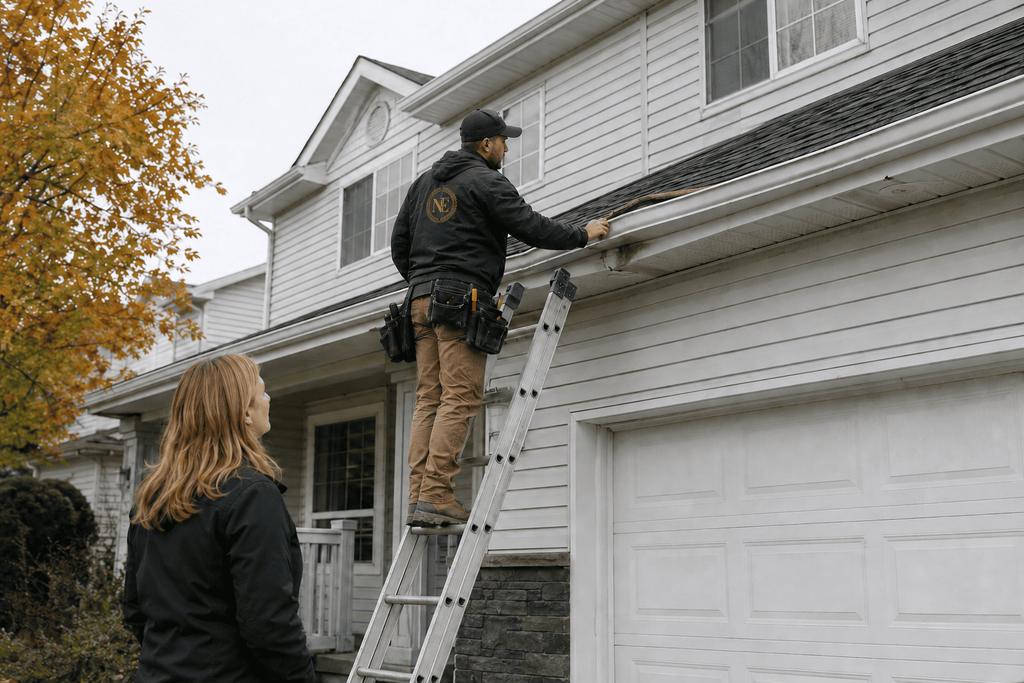
A leaking gutter does not automatically mean the entire system needs to be replaced. Sometimes the problem is limited to one loose corner, a clogged downspout, or a short section that has shifted out of position. In other cases, what looks like a small leak from the ground is only one sign of a system that has been failing for years.
That is where the repair-versus-replacement decision becomes difficult.
For Edmonton homeowners, the age of the gutters is only part of the answer. Alberta’s freeze-thaw cycles, heavy spring runoff, summer storms, snow, ice, and sudden temperature changes can all affect how an eavestrough system performs. The location and extent of the damage often matter more than the date it was installed.
Before spending money on either option, it helps to understand what can be repaired reliably and when another patch is unlikely to last.
Start With the Source of the Problem
Water dripping from the gutter does not always mean the gutter itself is damaged.
The actual cause might be a blocked downspout, debris preventing water from reaching an outlet, or a gutter section that has lost its proper slope. Water may also be running behind the eavestrough because of an issue with the drip edge or the way the gutter sits against the fascia.
The first step is to look at the complete drainage path:
- Where does water enter the gutter?
- Does it move toward the downspout?
- Is the downspout clear?
- Where is the water discharged?
- Are any sections sagging or pulling away?
- Is water leaking from one connection or several areas?
Looking only at the wet spot can lead to the wrong repair. For example, sealing a corner will not help if standing water keeps collecting there because the entire run slopes in the wrong direction.
When Gutter Repair Usually Makes Sense
A repair is generally the better option when the problem is localized and the rest of the system remains structurally sound.
One leaking corner is a common example. Sealant can break down over time, particularly after repeated exposure to freezing and thawing. If the surrounding gutter is still straight, securely attached, and free from corrosion, resealing that connection may restore proper performance.
Loose hangers can also be replaced. A short section that has shifted may be repositioned and secured, provided the fascia behind it is strong enough to hold new fasteners.
Other repairable problems often include a disconnected downspout, a damaged outlet, a missing end cap, a minor puncture, or a blockage that causes water to back up during rain.
In these situations, repairing a damaged gutter system can extend its useful life without the cost of replacing components that are still working properly.
The key word is localized. One clear issue is different from several leaks appearing along the same roofline.
A Clogged System Can Look Worse Than It Is
Edmonton gutters collect more than autumn leaves. Poplar fluff, spruce needles, seeds, shingle grit, dirt, and small twigs can all build up inside the trough or downspout.
Once water can no longer reach the outlet, it rises until it spills over the edge. From the ground, this can look like a capacity problem or a failed installation. In reality, the gutter may simply need to be cleaned.
Standing debris can also hold moisture against the metal and add unnecessary weight. During cold weather, trapped water freezes and makes the system even heavier. Over time, this can pull hangers loose or cause a section to lose its slope.
Cleaning the gutters and flushing the downspouts should therefore be part of the assessment. It is difficult to judge the condition of a drainage system when it is full of debris.
If cleaning restores normal flow and no structural damage is found, replacement may not be necessary.
Signs That Replacement Is the Better Investment
There is a point where continued repair stops making financial sense.
If leaks are appearing in several locations, the issue is no longer isolated. Multiple failing seams, widespread corrosion, long sagging sections, or gutters that repeatedly pull away from the house suggest that the system is reaching the end of its useful life or was not installed correctly in the first place.
Replacement is also worth considering when the gutters are too small for the roof. A system can be clean, properly sealed, and still overflow because it cannot handle the amount of water arriving from a large or steep roof section.
This is often noticeable near valleys. Two roof slopes can direct a concentrated stream of water into one short section of eavestrough. If the gutter or outlet cannot move that water quickly enough, overflow will return during every major storm.
Another warning sign is repeated service in the same area. If a corner has been resealed several times or a long run keeps falling out of alignment, paying for another repair may only postpone the larger project.
A full gutter replacement for an Edmonton home provides an opportunity to correct the slope, capacity, hanger spacing, and downspout placement instead of continuing to address the symptoms one at a time.
Do Not Ignore the Fascia Behind the Gutters
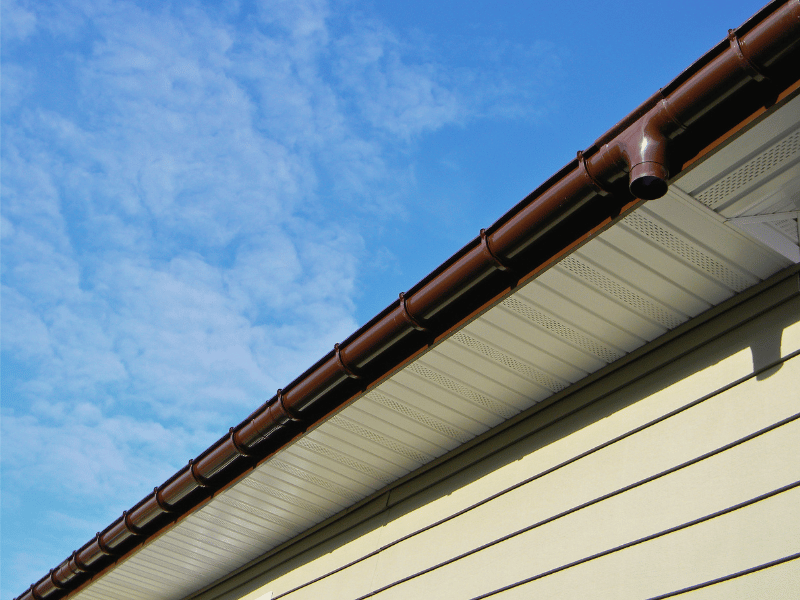
The condition of the fascia can change the entire recommendation.
Gutters need a secure mounting surface. If the wood behind them is soft, rotted, cracked, or separating from the roofline, tightening the old hangers will not create a lasting repair. The fasteners may hold temporarily, but they are likely to loosen again.
Fascia damage is not always obvious until the gutter has been removed. There may be peeling paint, dark staining, soft areas around old spike holes, or gaps where water has been running behind the eavestrough.
A small damaged section can sometimes be repaired without replacing every gutter. More extensive deterioration may require the affected fascia to be restored before a new system can be installed.
Nice Exteriors also handles soffit and fascia repairs when moisture has affected more than the gutter itself. Addressing the supporting structure first helps prevent the same attachment problem from returning.
Why Older Spiked Gutters Often Keep Coming Loose
Many older gutter systems were attached with long spikes or nails. Over time, those fasteners can work their way out of the fascia.
Edmonton’s temperature changes contribute to the problem. Exterior wood and metal expand and contract throughout the year. Add the weight of standing water, wet debris, snow, or ice, and a loosened section can gradually pull farther away from the roofline.
Hammering the spike back in may close the gap for a while, but it usually does not restore the original holding strength. If several spikes are loose, the gutter may continue sagging between attachment points.
Nice Exteriors uses heavy-duty steel hangers with rubber-washer screws rather than nails when installing new seamless gutters. The fastening method creates a more secure connection and helps the gutter maintain the slope needed for proper drainage.
This does not mean every spiked system needs immediate replacement. If only one attachment has failed and the fascia remains solid, a repair may still be practical. Widespread movement along the roofline is a different situation.
Repairing One Section vs. Replacing the Full System
Partial replacement can sometimes be a reasonable middle ground.
Suppose the gutters around the main house are performing well, but a lower garage section was damaged by ice or a falling branch. Replacing only the damaged run may solve the problem without disturbing the rest of the system.
The challenge is matching the new section to the existing gutter size, profile, colour, and drainage layout. Older colors may have faded, and the original profile may no longer be readily available. A new white section beside an older weathered one can also look noticeably different.
Partial work makes the most sense when the damaged section operates independently. If it connects directly to older gutters that are already leaking or sagging, replacing one piece may not address the broader issue.
How Much Does the Cost Difference Matter?
Repair costs are usually lower than replacement costs, but the cheapest immediate option is not always the least expensive over several years.
A single worthwhile repair can add useful life to a good system. Several small repairs performed every season can quickly add up, especially if the gutters still overflow or pull away after each visit.
For 2026 planning, standard residential aluminum gutter replacement in Edmonton may cost approximately $8 to $15 per linear foot, depending on the home and what the quote includes. Height, roofline complexity, gutter size, downspouts, removal, access, and fascia work can all affect the total.
Repair pricing is more project-specific. Clearing and reconnecting a downspout is very different from realigning a long second-storey run or rebuilding several corners.
A good contractor should be able to explain whether the proposed repair addresses the cause of the problem and how much useful life it is reasonably expected to add. If replacement is recommended, the explanation should identify what has failed across the existing system.

What We Look at During an Inspection
There is no single test that determines whether gutters should be repaired or replaced. The decision comes from looking at several parts of the system together.
The gutter should have a consistent slope without obvious low areas. Corners and end caps need to remain sealed. Hangers should be secure, and the fascia must be strong enough to support them. Downspouts need to be open, appropriately sized, and positioned where they can carry water away from the house.
We also look at what happens below the roofline. Soil erosion, dark marks on the siding, water beside the foundation, and staining on the fascia can reveal drainage problems that are not obvious during dry weather.
A homeowner may call about one dripping corner and learn that the rest of the system is in good shape. Another system may look acceptable until an inspection shows several loose runs and damaged fascia. The recommendation should be based on what the home actually needs, not a one-size-fits-all answer.
Questions to Ask Before Approving the Work
Whether you receive a repair quote or a replacement estimate, ask what caused the problem and what the proposed work will correct.
For a repair, find out whether the surrounding gutter and fascia are still in good condition. Ask if the work is intended as a lasting fix or a temporary measure.
For replacement, confirm the gutter size, number of downspouts, removal and disposal, fastening method, and warranty. It is also worth asking whether the existing layout will be copied or adjusted to improve drainage.
A clear explanation is often more valuable than a long list of materials. You should understand why the work is being recommended before agreeing to it.
Frequently Asked Questions
Can a leaking gutter be repaired?
Yes. A leak from one corner, end cap, or small damaged area can often be repaired if the surrounding gutter is still in good condition. Multiple leaks across an older system are more likely to justify replacement.
Should sagging gutters be repaired or replaced?
A short sagging section may be realigned and secured. If long sections are sagging, several hangers are loose, or the fascia is damaged, replacement may provide a more reliable solution.
How do I know if my gutters are too small?
Gutters may be undersized if they regularly overflow during heavy rain even after they have been cleaned and the downspouts are open. Roof size, slope, valleys, gutter width, and downspout capacity all need to be considered.
Can only one side of the house be replaced?
Yes. Partial replacement is possible when the damaged run is separate from the rest of the system and the remaining gutters are still performing properly.
Does gutter replacement include fascia repair?
Not automatically. Fascia repair may be quoted separately if damaged wood is discovered. The estimate should clearly state whether any fascia work is included.
Get an Honest Assessment of Your Gutters
The right decision is not always the larger project. A sound gutter system with one damaged area should not be replaced without a good reason. At the same time, repeatedly repairing a failing system can cost more while leaving the home exposed to ongoing overflow and drainage problems.
Nice Exteriors inspects gutter systems throughout Edmonton and surrounding communities. We look at the damage, drainage, fascia condition, gutter capacity, and attachment method before recommending repair or replacement.
Contact Nice Exteriors to arrange an inspection and find out which option makes the most sense for your home.